Archive
Journaling the Apocalypse

Walnut ink, gouache, and bleach on Arches 140# cold press, 22×50″
(Click on image to view at larger size.)
by Pica
 ::
::  ::
::  ::
::  ::
::  ::
::  ::
::  ::
::  ::
::  ::
::  ::
:: 
Tin
On tv we saw a woman living
with her kids in a tin slum.
She showed the camera man
an open stove, a hairbrush
on a box that was her bedside table.
Along one wall, dirty water trickled
around bullet holes, ticking,
limned by the reporter’s voice-over.
How we like to focus on what’s close up.
We don’t even know where the bullets go—
through cities and forests, clean
into the open air.
At the Last Hotel
In here, where they stop along the way,
the night porter’s taking care of business —
arrivals and departures, room service,
security and welfare. He holds the keys,
manages the risks, a visible deterrent.
He checks the entryways, dark corners of reception,
the unattended spaces. He’s the one
who picks up what the travellers leave behind,
collects abandoned suitcases and bags.
He observes, arranges meetings, monitors
trespasses and transgressions, writes reports.
Left alone, he’ll clear the till
and count the day’s receipts, and then
one elbow on the desk, a little quiet music,
he reads The Guardian or the Evening Argus.
Midnight amplifies the tick of the revolving door,
footsteps in the lobby,
sudden buzz of the night-bell.
by Ray Templeton
:: :: :: :: :: :: :: :: :: ::
Ravenous vermin in front of velvet ropes
Past Cerberus-headed security men
VIP admission seduction-guaranteed
among stuffed couches and cavernous lounges
A studied glimpse at a closed circle of hell
where man eats man till there is nothing left
cold-blooded lizards repose in the limelight
Surrounded by mysterious pieces of detritus
a patchwork of brick and textured plaster
the bodies gouged and the skin punctured
Strutting for the paparazzi then slinking
scurrying away here an African fetish
there the head of a doge in alabaster
Flaking Formica tabletops displayed
as splattered paintings their wild beauty
of outright decay and its cousin accident
Time’s ability to turn anything into art
whether man-made or genuine and natural
the posed the candid stillborn and mundane
The great confusion of life imitating life
a skull covered jewel-like with scarabs
that holds a dead rat in its gapping mouth
But grimmest of all were the star’s handlers
there being no such thing as bad publicity
in the line between fame and misfortune
What I liked best is it got us fucked up
we partied so hard we woke up the dead
it was the final blackout of the year
by Alex Cigale
:: :: :: :: :: :: :: :: :: ::
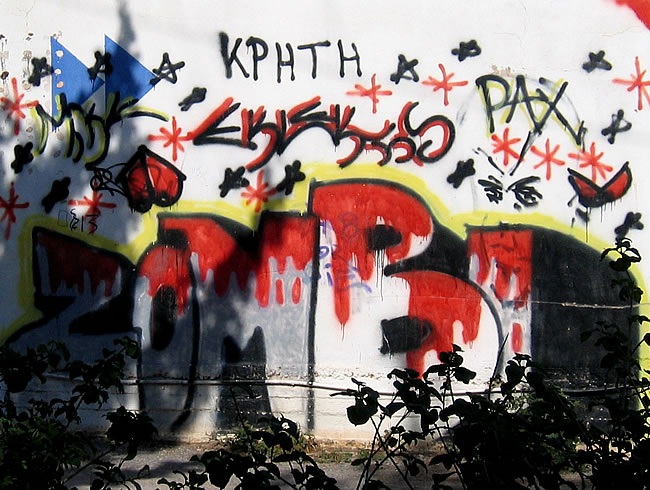
The Apokalypsis Pentaptych
1. lachrymose
She started crying at the age of fifteen and could not stop. How it started not even she knew now; possibly getting dumped by that boy she liked, the one with the green eyes and chestnut hair, or it might have been that poetry contest she was sure she’d win but didn’t, or it could have been just a burst of overwhelming hormones. Whatever the cause, she cried and cried, and then when she was ready to stop, she found herself unable. Her tear ducts locked open, the flow of saline a constant thing.
The bucket that her mother placed by her bed was replaced by a larger bucket to decrease the trips to the bathroom to empty it. With no sign of stopping, her father bought an inexpensive bathtub and rigged up the plumbing so that the tears would funnel to the outside and connect up with the drainpipe. But the tears continued unabated, and soon the garden was flooded, and then the entire yard.
The doctors were stumped, and angry at their shoes being ruined by the salt water. She wasn’t getting dehydrated, they said, so we don’t have any idea where the water is coming from.
She was taken to the Grand Canyon, but she filled it. They placed her in the sewers, but she flooded them. Her parents drove her out to the middle of Arizona and left her there.
Her tears overflowed the world, drowned out the buildings, the people. She floated on an oak door in the sea of her sadness, and cried for her solitude. But soon, survivors appeared on their makeshift rafts and said, “We are here to worship you, to tell you that you are not alone.”
She looked at the small band of travelers who had sacrificed so much to reach her, and she smiled. The tears slowed, then stopped. She was happy.
2. detritus
You knew this would happen, didn’t you? I don’t put it past you to have omitted certain facets of my existence, to leave me out of the loop. “Oh, I just didn’t get around to telling you,” you might have said, or, “Well, I really didn’t think it was that important.”
But it is important. My dissolution is pretty. Fucking. Important.
When you patched me together from the corpses of others, you knew I would have a shelf life, a termination point, a sell-by date. A decade of life may seem like a long time, but it’s just a drop in the bucket, a cosmic blink. I’m disposable, the tissue you casually toss into the bin when it no longer serves your purpose.
I’ve tried to hide it with baggy clothes, but people are starting to notice the pieces dropping off of me, like a snake’s second skin, only this is my only skin, these my only parts, and I am slowly losing them all. It has been five years since I escaped from your laboratory, and the people of this lost European city have grown used to seeing me on the streets. But the smell is getting unbearable, this leprosy of the undead, and even when I try to buy bread or fish at the market stalls, the merchants see the trail, the long trail of detritus extending behind me, the rotted bits and pieces of me, and they deny me purchase, cowering behind their stalls, as if they could catch my affliction.
It’s hard to walk now that my toes are all gone. I sneezed last week, and my nose dropped into my lap. When I set out a saucer of cream yesterday for the neighborhood cats, my lower lip and one of my ears slid off my face and splashed into the whiteness.
It can’t be much longer now.
What will be left of me when this is all done? How will I be found? An assemblage of body parts, now come unstitched? It seems such a senseless way to end this existence. I wonder what the gendarmes will think when they investigate my dissolution.
Times like these, I wish I hadn’t escaped. Maybe you could have fixed me, replaced the old bits with new. Maybe if you hadn’t died of emphysema (I always scolded you for your cigars), I could have pleaded with you for a longer life. Maybe you would have agreed. But, it no longer matters.
So I sit in my dusty hovel, and I read the broadsheets, holding the papers with my few remaining fingers. Every time I cough, bits of my lungs separate themselves from the rest of me. I sit here, and read, and slowly fall to pieces.
3. incarnadine
The more he scrubs it, the more it bleeds.
It is the size of a tick, and clutches fast to an area just below the pit of his right knee, at the top of his calf. But he is not worried about Lyme disease, since it is, in fact, not a tick.
When they take you up into the blinding light, you are disoriented and afraid. When they return you, often without any memory of the abduction, they leave behind a tracking device. An organic nub that relays information about location and blood sugar level and thyroid balance.
Most don’t remember the trip, the examinations, the scrutiny, the taking apart and putting back together again. Most don’t, but he does.
It has been three months, and he wakes every night, screaming and tangled in sheets soaked through with his own sweat.
When he tried pulling off the tracking device, every joint in his body shrieked with the feeling of shards of glass being ground in. When he tried to burn it off with an acetylene torch, his heart and lungs temporarily shut down. When he tried to drown it in rubbing alcohol, he urinated blood for a week.
He feels them peering into his brain, using the device to look through his eyes, feel through his skin. More and more, his body does not feel like his own.
And so he scrubs at the tracking device that looks like a tick but isn’t, grinding the steel wool into its surface and the surrounding skin of his calf, turning both a deep incarnadine.
He still scrubbing as they reappear, blinding him with blue-white light, gently taking the steel wool from his raw fingers, looking this time more angry than inquisitive, numbing his nerves with their long fingers, no longer interested in examination. As he quickly falls into the black hole of unconsciousness, he knows that he will not be returning this time, that this time they are abducting him to inflict punishment, to teach them who is dominant, that resistance is useless.
4. hypomnesia
We sit here, you and I, together in this cell, unknowing, unaware. I watch your jerky movements, spastic, the twitches of thousands of misfired neurons. I do not remember you, and from your blank look I can see that the feeling is mutual. I do know that I loved you, even if your identity is gone, like mine.
The dry cake they feed us, delivered once a day through a wall tube, crumbles like ash, tasteless, void of nutritional value. Water drips somewhere, but I cannot locate its source. I am thirsty, my lips cracked, my skin parchment. I know nothing other than this cell, and you.
Why do they, whoever “they” are, keep us here? Flashes of intelligence secrets linger in my hippocampus, though nothing I can grab on to, vaporous and ephemeral in the eye of my mind. Information important to the opposition, to the rebels. Haven’t we given them everything they want to know?
Whatever procedure they used to delete my memories seems to have overloaded your poor brain, and you can only communicate now in grunts, reversed down the evolutionary chain to your simian ancestors. Your movements become more erratic every day, and I fear you will turn violent.
Perhaps they have forgotten about us, now that they know everything we know. Maybe our side attacked, and is unaware we are here. Or you were actually the interrogator, and I fought back. Or maybe the reverse is true. It’s impossible to know for sure.
The air grows thin. I have lost all hope of being released from this place. Either I will starve, or you will kill me in ignorant rage. I do hope it happens quickly. The one thing I hang on to is the knowledge-perhaps false, perhaps true-that at one time, long ago, I held you in my arms and kissed you, and you kissed me back.
5. mellifluous
She stood there mesmerized as Honey Volcano erupted in front of her, awake now after two millennia of dormancy. Sugar crystals ignited in the air, then drifted down to settle on the thatched roofs of the homes of the townspeople. Screams from behind her, and the thunder of stampeding exodus, but she couldn’t take her eyes away from the exploding mountain. Thick syrupy lava oozed a swath down the slope, its path taking it straight into town, straight through her. She closed her eyes and let it claim her. She recited the poetry of her ancestors as it flowed over her feet, ankles, shins, knees, waist, stomach, breasts, shoulders. Her words still uttered as the honey-colored lava slipped over her head, her words as mellifluous as the flow, her voice preserved for centuries.
Today, if you can find the poor abandoned village, and if you can manage to excavate down to the houses and trees and lives that were assimilated by Honey Volcano, and if you chip away at the lava rock enough to find an air bubble, in that moment of release when your pick frees the air that has been trapped for hundreds of years, you will hear ancient poetry, recited by a faint but beautiful female voice.
Background music: “corona radiata,” by Nine Inch Nails, from their album the slip. It is available for use under a Creative Commons Attribution-Noncommercial-Share Alike license.
:: :: :: :: :: :: :: :: :: ::
After the apocalypse, an English tutor considers her own corpse
I live on a farm. We raise kidneys
to meet the overwhelming demand
for transplants after the explosion.
Nearly everyone, it is believed,
will need to replace one or both
of their kidneys by age 54.
When my grandparents were alive,
corn filled the fields. But now,
rows and rows of kidneys plump
beneath the moon. They thrive
in the night air. By day, they must
drink from a constant spray of water.
The stable looks like an ICU.
Hospital beds nest in stalls where
fat cows and their wobbly calves
used to wait. Hundreds of people
(livestock, too, really) pass their days
with dialysis here until the crop ripens.
During the harvest, we’ll feed
dozens of doctors at the long table
in the farm house. The military police
eat under their tent near the guard shack.
We barely notice them anymore,
and our fear is mostly gone.
My job is to teach English to field hands,
who primarily speak Snorvlak. Humans
never developed a liking for tending
organs. Interplanetary treaties permit
laborers to work in specific industries.
They travel years for jobs like these.
My brother said they spy on us.
I didn’t believe it until he
was arrested. I don’t know where
he is now, but I don’t think he’s alive.
It is rumored that prisoner organs are
cut away and dried for use as seed.
We don’t feel safe asking about
the people we don’t see anymore.
No one ever dies of old age. They just
disappear. I pull weeds at the old family
plot near the forest and wonder,
What will become of my bones?
:: :: :: :: :: :: :: :: :: ::
The Last Man on Earth
She heard the plane long before it came into view, its small engine sputtering and whining. The jungle fell silent as the plane climbed into the sky and died. It hung weightless before spiraling into the ocean. A moment later a parachute opened — one small blot in a pristine sky.
She was impressed by the way the man worked the lines of his chute, swinging in his harness, moving toward land. Once he hit water, the white silk settled over him and floated on the surface like a large jellyfish.
Well, that’s that, she thought, watching the slow current carry the whole mess around the south end of the island.
Later, just as the trio of black-crested gibbons were finishing their evening song, a yoo-hooing voice moved toward her.
“Thank God for your signal fire.” A young, haggard man sank to his knees. “It led me right to you.” Men, she thought, taking the single fish from the spit and offering it to him on a banana leaf.
“Do you speak English?” he said a moment later, as he returned the leaf with its small nest of bones.
“Yes, I do. English major. Virginia Woolf.” Her eyes followed the scalloped moonlight of the shoreline. “I thought I’d done her one better.”
“Well, Virginia,” the man said, laying out a large knife and a small folding saw. “Your troubles are over. Tomorrow, I’ll start whipping this place into shape.”
At sunrise, he lashed the knife with its thick leather handle to a bamboo pole. “Any predators here? Large ones?” he said, as he waded waist-deep into the lagoon.
“Just us,” she called. She watched as he brought up the first fish, a small grouper, a huge hole in its pink side, its gill covers flaring wildly.
“There’s no refrigeration,” she said, watching the fish slam its tail against the sand. She stunned it with a stone.
“Well done,” he said, anointing her with a smile as he dropped a black bass beside the grouper.
“We can’t eat all these.” She inspected the wound on the bass. “They won’t keep.” She raised her stone.
“I’m taking an inventory. It’s good to know what you have.” He grinned and trotted into the water, the spear glistening overhead.
She dispatched the bass and walked to the next lagoon. As she bathed in the pristine water, small fish nibbled her fingers and toes. He was a nice looking man, she thought, good facial symmetry, adequate cranial circumference, and he had blue eyes. So did she. It tickled her to think that a recessive gene suddenly stood a small chance, not only of surviving, but of becoming dominant.
“We may be,” he had said the night before, “the last two people on earth.” A momentary gleam ignited in his exhausted eyes as he spread out the parachute like a silken sheet and fell asleep.
“Very likely we are,” she’d murmured, as she curled her body against his and felt him pull her snug against his side. She had not told him about her surveyor’s cabin with its small stove, cot and fourteen months worth of ecological diaries.
The line of dead and dying fish had tripled by the time she returned. The man stood thigh-deep in water maneuvering a sea turtle toward land.
“That’s an olive ridley,” she said, recognizing its heart-shaped shell. “They’re critically endangered.”
“Soup,” he said, pinning the turtle to the beach with one foot. “And there’s monkeys here too.” He freed the knife from the pole.
“I’ve got something much better.” She looked deep into his blue eyes. “Much, much better and just for you,” she whispered, as he turned toward her and the turtle slid back into the water.
She selected a puffer fish from the row of bodies on the beach, and taking the knife from his hand, she filleted it, liver and all.
by Karen Stromberg
Reading by Beth Adams – Download the MP3
:: :: :: :: :: :: :: :: :: ::
Borders Construction Site
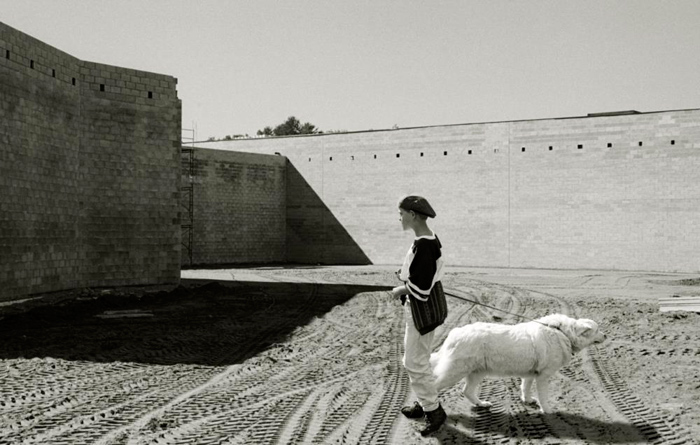
West Lebanon, New Hampshire
(Click on image to view at larger size.)
:: :: :: :: :: :: :: :: :: ::
England
Shrubs in the hedgerow sharps whisper conspiracies,
with breath of grey wind torn from shrouds stretched over
the land of fear. Sheep stand cold in the rain,
tree branches fracture light fault lines,
fingering upwards where the ravens clot,
circle, clot. Locked-down land, squeezed tight;
police country, clocked by the cc camera,
factories rolling out weapons, wheeling out tanks,
beneath the radar-rook-infested storm,
helicopters beat low over Stonehenge,
satellite heaven, black electronic cloud,
cracked by media thunder; shoppers galloping
crazy down Oxford Street, reality tv eyes
staring flat across the flat, hard to the tor.
The grid lines gather, the ley lines collect and hum,
accumulating power; tractors tattooed
into the raw soil, etched into landscape skin.
We huddle, we whisper against the terrorist,
and reaffirm our bond. We pray for petrol, diesel.
The trucks muster and hurtle down the M4.
Fluoro-jacketed police sharpshooters, deliver us.
by Paul Stevens
:: :: :: :: :: :: :: :: :: ::
 qarrtsiluni