Archive
Three Romanian poems by Mihail Gălăţanu
translated by Adam J. Sorkin and Petru Iamandi
Umblînd prin lumea morţilor
Dacă mama mea ar muri,
Eu, cum să supraviețuiesc?
Eu, care nu sînt decît o terminație a ei, un terminal al aeroportului ei, un apendice, o extremitate a dorului ei de viață, întinsă, din păcate, spre moarte.
Eu nu sunt decît o unghie a ei, rebelă, care a crescut prea departe. Un ovul care s-a rătăcit. S-a lepădat. Un firicel de păr al ei care s-a pierdut și a căpătat, temporar, autonomie de zbor. Căruia i-a intrat în cap, treptat-treptat, c-ar putea exista de unul singur, c-ar putea trăi și muri de capul lui.
Eu sunt doar o lacrimă a ei care s-a întărit,
s-a condensat,
a crescut
și s-a făcut bărbat
s-a solidificat într-atît încît a devenit o statuie de sare,
umblînd și plîngînd pe la morți
și în lumea morților,
pe la obor și bazare.
Sunt o tumoare a ei care a crescut nefiresc de mult
și acum nu mai știe cum să intre înapoi.
Care se miră cum, dintr-o singură femeie tristă și frumoasă,
m-am replicat
și acum am ajuns doi.
*
Wandering the Realm of the Dead
If my mother were to die,
what about me, how could I survive?
I, who am just one of her terminations, a suffix, a terminal in her airport, an appendix, an extremity of her urge to live, tending, unfortunately, toward death.
I am just a fingernail of hers, rebellious, grown too long. An ovule that has gone astray. Rejecting all that is. A tiny hair of hers that lost its way and temporarily attained independent flight. That got into its head, little by little, that it could live on its own, could live and die by itself.
I am one of her tears that has congealed,
solidified,
grown,
turned into a man
hardened so much it became a statue of salt,
seeing the dead and weeping for them
wandering and weeping for the dead
in the realm of the dead,
the stockyard and the bazaars.
I am just a tumor of hers that has grown unnaturally big
and now no longer knows how to get back inside,
that wonders how, from one single woman, beautiful and sad,
I was duplicated,
so that now we are two.
* * *
La Perfuzia
(Fîntîna Perfuziei)
Bolnavii dădeau noroc cu perfuziile
şi spunea cîrciumii, care era în burta mamei mele,
“LA PERFUZIA”.
Mama din milă îi primise acolo, îi aciuase –
erau cu toţii sans-abrit.
Îi ospătase.
Era un fel de azil al tuturor celor asemeni mie,
Al tuturor nenăscuţilor
eu aventurier în Anzii Cordilieri,
eu marinar.
De fapt, în LA PERFUZIA
mă întîneam doar eu cu mine însumi,
era o bună cîrciumă de a mă întîlni
singur, necăsătorit, douăzeci şi opt de ani, încă brunet, ochi negri
cu treizeci şase de ani, căsătorit, copil, grizonat.
Viaţa mea se împletea
Cu mai multe vieţi virtuale,
Tot ale mele,
Mai amare, mai jucăuşe,
Mai eremite, mai venale.
Viaţa mea se topea după mine.
De fapt, viaţa mea
Se nutrea ea însăşi dintr-o perfuzie,
Eram veşnic perfuzionat,
cum era altul veşnic iluzionat.
Ce perfuzie e viaţa, spuneam,
însăşi fîntîna perfuziei,
din care sorbeam
şi întineream,
chiar burta mamei mele era perfuzia,
chiar limfa
şi lichidul amniotic,
otic
otic!
(Spunea ecoul).
Fîntîna lehuziei,
Pentru mama mea,
Aşa ecoul mai spunea. Mama mea trăise o lehuzie de peste patruzeci de ani, cu mine, după mine, de aceea nici n-a mai putut să mai aibă alt copil, de aceea nici n-a mai putut să cunoască alt bărbat. Eu sînt, Doamne, prin Voia Ta, facă-se, pururi, Doamne,
Singurul bărbat pe care mama mea l-a cunoscut cu adevărat.
Zilnic mă gîndesc la asta.
Mama mea nu m-a născut prunc, ci direct bărbat,
Să mă poată iubi la maturitate,
La maternitate,
Să se bucure de părul meu deja lung şi buclat,
De ochii mei tăciunii,
De firea mea aspră şi şfichiuitoare,
de rus ne-nţărcat.
*
At Perfusion’s
(The Fountain of Perfusion)
The patients clinked their perfusions in a toast
and called the bar inside my mother’s womb
Perfusion’s.
Out of pity, Mother had let them in, sheltered them—
they were homeless.
She hosted them.
It became a sort of asylum for those like me,
the unborn.
I an adventurer in the Andes,
I a mariner.
In fact, at Perfusion’s,
I met only my own self.
It was a good tavern to meet myself
alone, single, twenty-eight years old, still dark-haired, eyes black,
then thirty-six years old, married with a child, gray-haired.
My life wove itself
with many lives, all virtual,
every one mine, personal,
more bitter, more playful,
more hermetic, more venal.
My heart melted for me.
In fact, my life
nurtured itself on perfusions.
I was permanently permeated,
like one who had permanent delusions.
Such a perfusion, life! I said with great effusion,
itself the fountain of perfusion
from which I drank
and grew young,
my mother’s womb itself the perfusion,
the lymph
and fluid amniotic,
otic
otic!
(the echo quoted).
The fountain of childbed
for my mother,
so the echo kept echoing. Mother had experienced a forty-year childbed, with me after me, that’s why she couldn’t bear another child, that’s why she couldn’t even know another man. I am, oh God, according to Your Will, may it be forever and ever, oh Lord,
the only man my mother has truly known.
I reflect on this every day.
Mother gave birth not to a baby but directly to a man,
so she could love me in maturity,
in maternity,
so she could take delight in my hair, already long and curly,
my eyes black as a raven,
my nature severe and authoritarian,
incorrigibly Russian.
* * *
Capătul lumii mele
Pe mama o iubeam pe molecule.
O iubeam subatomic, pe particule, pe ţesuturi, pe fascii musculare, pe mici aglutinări adipoase, pe grupe de muşchi. Prapurul era ptolemeicul linţoliu al lumii mele. Prapurul era capătul lumii şi marginea universului.
Şi universul era rotund, aşa cum numai o burtă de fecioară
poate fi, curba perfectă,
curbura perfectă a lumii,
cum numai o burtă de mamă poate fi.
*
The End of My World
I loved Mama for each molecule.
I loved her sub-atomically, for each particle, each tissue, each muscular fascia, each small adipose agglutination, each muscle group. The peritoneum was my world’s Ptolemaic shroud. The peritoneum was the world’s end
and the universe’s edge.
And the universe was round, as only a virgin’s womb
can be, a perfect curve,
the world’s perfect curvature,
as only a mother’s womb can be.
Mihail Gălăţanu was born in 1963 in the Romanian city of Galati. He published his first book of poems in 1987, Stiri despre mine (News About Me — Bucharest: Litera), his second six year later, Scrîsnind în pumni (Keeping My Fists Tight — Galati, Romania: Porto Franco, 1993), and since then, the equivalent of a book of poetry or prose each year. Among recent poetry titles are Mormîntul meu se sapa singur (My Grave Digs Itself — Bucharest: Vinea, 2003) and, from the same publisher, Burta înstelata (The Starry Womb — 2005). Gălăţanu was editor-in-chief of Playboy Romanian and now edits Flacara, a glossy monthly magazine. His poems have appeared in Arson, Diode, The Bitter Oleander, Glint, Born in Utopia: An Anthology of Modern and Contemporary Romanian Poetry, ed. Carmen Firan, Paul Doru Mugur, Edward Foster (Talisman House, 2006) and New European Poets, ed. Wayne Miller and Kevin Prufer (Graywolf, 2008), and are due out in Wheelhouse Magazine and Calque.
Petru Iamandi, PhD, is an associate professor with the English Department of the Faculty of Letters, Dunărea de Jos University of Galaţi, Romania, and a member of Romanian Writers’ Union. He has written American Culture for Democracy (2001), English and American Literature – Science Fiction (2003), American History and Civilization (2004), Literature about the Future (2004), An Outline of American English (2008), and An Introduction to Consecutive and Simultaneous Interpreting (2010), and compiled an English-Romanian Dictionary (2000). He’s the co-author and co-editor of several dictionaries and English textbooks. He’s translated twenty-four books from English into Romanian and twenty-two books from Romanian into English (prose, poetry, drama, non-fiction). In 2008, the Dramatic Theatre in Galaţi staged his translation of Harold Pinter’s The Birthday Party. His translations have been published in various British and American magazines, he’s received awards from Antares, Porto-Franco and Dunărea de Jos magazines, and he’s included in Who’s Who in the World (1999, 2001).
Adam J. Sorkin recently published Memory Glyphs: Three Prose Poets from Romania (Twisted Spoon Press, 2009), Mircea Ivănescu’s Lines Poems Poetry (University Press of Plymouth, UK, translated with Lidia Vianu), Rock and Dew, selected poems by Carmen Firan (The Sheep Meadow Press, 2010, translated mostly with the poet) and Ioan Es. Pop’s No Way Out of Hadesburg (Plymouth, also with Vianu, 2010).
In-between us
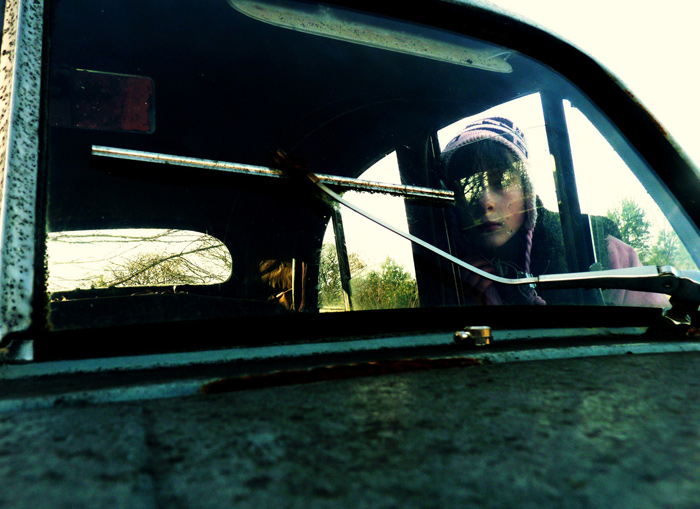
Click on image to see a larger version.
Eleanor Leonne Bennett (Flickr photostream) was the only person from the United Kingdom to place in National Geographic’s See The Bigger Picture biodiversity photography contest. She has won the Woodland Trust Nature Detectives art competition three times since the age of 11. She was a winner of the Wrexham Science Festival photo contest and took first and second place with UK Butterflies photo contest (under 16s). She was twice winner of the Big Issue Magazine‘s monthly photo competition, her photos have appeared in Splash of Red and Creative Boom Magazine, and she has had her photo “bug eyes” exhibited outside Paris, France, where the panels were displayed outside the headquarters of UNESCO to celebrate the start of the International Year of Biodiversity.
Code
written and performed by Hannah Stephenson
(lyrics)
You finally figured out
what was off;
you wrote it down.
Messages on post-it notes,
They try to stick.
They cling and grope.
You try to line them up,
balance words like building blocks.
Calm it down, a seesaw to a house.
What are you saying to yourself?
You keep inflating all the vowels.
We assign a picture to a thing,
and tie them with a string.
They bash into everything.
Can you recognize
these feeble forms
you work to write?
Like a signal from a boat,
you blink a light;
it’s all in code.
This map needs a key,
someone good at interpreting.
Calm it down, a seesaw to a house.
What are you saying to yourself?
Please stop covering your mouth.
We assign a picture to a thing,
and tie them with a string.
They drip onto everything.
Hannah Stephenson is a poet, writer, and instructor living in Columbus, Ohio. Her poems have appeared in ouroboros review, Mankind Magazine, Spoonful, The Birmingham Arts Journal, and Artsy!Dartsy!. You can visit her daily poetry blog, The Storialist, at www.thestorialist.com and hear more of her music at www.soundcloud.com/thestorialist.
Body/Scape: Two Studies
by Sarah Busse
Why I Should Be a Landscape Quilter
* * *
Good Morning, Green Bay
Freshwater waterscape sloshed
with tumulted gull-screech,
this morning your body lies
breathlessly unfamiliar
in its streets and lampposts.
I have to walk a little farther,
faster, as love stands witness
to how we dilapidate.
Can you bear it? Can you
give me directions?
My sisters laugh, terrified
at how I change, crack
open, change and crack again.
A faulty pot, misfired.
No, no, I say. This
is what human looks like, this
closed-off Northern face,
lost and falling, sky-colored
sidewalks, the angular
scrawk of a lone goose, yawn
of traffic over the drawbridge.
Sarah Busse (website) is a co-editor of Verse Wisconsin. She’s the author of Quiver (Red Dragonfly Press, 2009) and Given These Magics (Finishing Line Press, 2010). A third chapbook, Gauguin in California, is forthcoming from Desperado Press. She has been featured at Verse Daily and Your Daily Poem.
Auf dem Amt/At the Ministry
by Marcus Speh
Auf dem Amt
du wartest in einem deutschen amt, tief im innern des apparats wie in einer räuberhöhle, wissend um die ungeheuerlichkeit der annahme, die dich umgebenden personen seien menschen, obwohl du an ihren mechanischen, auf die vergangene, zweifelhafte glorie effizienten mordens hindeutenden (keine anzeichen von prozesslähmendem selbst-bewusstsein verratenden) bewegungen sehen kannst, dass es sich beim deutschen beamten um ein wunder der ingenieurkunst handelt, um eine macher-machete im bürokratie-dschungel und nicht um einen hilfreichen engel. hier sitzt du nicht um der erleuchtung oder der erbauung willen, sondern aus angst, ein falscher schritt möge dein ende bedeuten. je länger sie dich warten lassen, um so mehr verfällst du der poesie der macht, bis du schließlich ihre ministeriellen verordnungen liest als wären es oden oder heilige gesänge.
At the Ministry
you wait in a german agency, deep inside the machine like in a den of thieves, knowing about the enormity of the assumption that the persons around you were people even though you can see from their mechanic movements hinting at the past doubtful glory of efficient murder (not betraying any signs of process-paralysing self-consciousness) that the german civil servant is a miracle of the art of engineering, a maker-machete in the jungle of bureaucracy — not a helpful angel. you don’t sit here to reach enlightenment or edification but only for fear a wrong step might mean your end. the longer they make you wait, the more you fall for the poetry of power until you read their ministerial orders as if they were odes or gospel.
Marcus Speh lives in Berlin, Germany, and usually writes in English. His short fiction has been or will be published in elimae, Mad Hatters Review, Metazen, Blue Fifth Review, Sand and other places. “At the ministry” was first performed at “This Berlin Life – live!” Marcus blogs at Nothing To Flawnt and is hard at work on a novel.
Erasing Mallarmé
My initial interest in erasure was in the practice itself; I wanted to “white out” or unravel a poem to experience the unique feel of simultaneously reading and writing. I was, curious about how the process differed when working with a short poem (this one) or a far longer poem such as John Ashbery’s “Self Portrait in a Convex Mirror”. (The Ashbery poem led to a larger, on-going project.) As well, I was interested in exploring the difference between “whiting out” and “crossing out” from both the standpoint of process and the visual effect, the presence of marks and the absence of marks/the presence of space. This led to my choice of “whiting out” a Mallarme poem because of his revolutionary use of blank space and careful placement of words. I am struck by the visual variation, created by chance, when the erasure and its translation (by Peter and Mary Ann Caws, from Stéphane Mallarmé’s Selected Poetry and Prose, New Directions Paperbook, 1982) are placed side by side; an illustration of the difference between language structures less obvious in the original.
Some consider Stéphane Mallarmé (1842-1898), French poet and critic, to be the most difficult French author to translate. I first encountered his work in a Surrealist Literature class in college. My interest in his work and the relationship between artists and writers continued into my graduate studies and beyond.
Autre Éventail
  pour que je plonge
                  sans chemin

                       dans ta main

                  de crepuscule


L’horizon

                     frissonne


Sens-tu le

               coin
                        pli!

               des         roses
             sur les soirs d’or
Ce blanc
Contre le feu
|
Her Fan
                  that I may plunge
Pathless

To

  twilight


          the horizon

                   shivering


Can you feel

       the corner
                         fold!

                   pink
            on golden eves is
      white
against             fire.
|
Lynne Shapiro lives and writes in Hoboken, New Jersey, not far from the Community College and Charter School where she currently teaches. Her poem “Replenish” was published in qarrtsiluni’s Water Issue. She drinks her morning coffee from a qarrtsiluni cup.
la felicidad es una pistola caliente/happiness is a warm gun
by José Eugenio Sánchez, translated by Anna Rosen Guercio
la eta mató a estudiantes guardias choferes enfermeras ministros
el ira a señoras que iban al súper
idi amin a congresistas campesinos jardineros obreros militares jockeys
pederastas sacerdotes
augusto mató las relaciones diplomáticas
nn mató a kennedy
la cia mató a jimi hendrix al wilson jesucristo karen carpenter
janis joplin john lennon beavis & butthead
el fbi a ma baker vincent vega
tommy larrin al capone felix pappalardi
la kgb a maïakovski trotsky y bukowski
la bbc mató a lady di
y a la madre teresa de calcuta
y a 1551 pasajeros del titanic
y a 17 tribunas de la liga premier
la kraft mató a la heinz
la pepsi a la coca
la coca a los gringos
el ddt a los piojos
el lsd a los protestantes
el pvc al poliestireno
al quaeda a sí mismos
el kkk a malcom x bob marley martin luther king garrincha y otelo
jp ii mató a jp i
aburto a colosio
yolanda a selena
camelia a emilo
fuenteovejuna al comendador
el aburrimiento a syd vicius
o jota simpson no mató a nadie
la policía mató indígenas en chiapas
el manchester con gol de último minuto mató las esperanzas del bayern
la emi mató a the beatles
la us army mató a miles de agresivos ancianos y niños
de korea japón vietnam nicaragua panamá irak yugoslavia
y a 140 de un edificio en oklahoma
el video mató a la estrella de radio
el pri mató 1 972 545 kilómetros cuadrados
la pgr mató dos pájaros de un tiro
la sep mató la ortografía
william burroughs a su esposa
:la vida es un invento del dinero
*
eta killed students policemen chauffeurs nurses officials
the ira, ladies who went to buy groceries
idi amin, congress members farmers gardeners workers soldiers jockeys
child molesters parish priests
augusto killed diplomatic relations
john doe killed kennedy
the cia killed jimi hendrix al wilson jesucristo karen carpenter
janis joplin john lennon beavis & butthead
the fbi, ma baker vincent vega
tommy larrin al capone felix pappalardi
the kgb, maïakovski trotsky and bukowski
the bbc killed lady di
and mother theresa of calcuta
and the titanic’s 1551 passengers
and the premier league’s 17 stadiums
kraft killed heinz
pepsi, coke
coke, gringos
ddt, lice
lsd, protestants
pvc, styrofoam
al qaida, themselves
the kkk, malcolm x bob marley martin luther king garrincha and othello
jp ii killed jp i
aburto, colosio
yolanda, selena
camelia, emilo
fuenteovejuna, the commander
boredom, sid vicious
oj simpson didn’t kill anybody
the police killed indigenous people in chiapas
manchester killed bayern’s hopes with a last minute goal
emi killed the beatles
the us army killed thousands of dangerous old people and children
from korea japan vietnam nicaragua panama iraq yugoslavia
and 140 in a building in oklahoma
video killed the radio star
the pri killed 1,972,545 square kilometers
the pgr killed two birds with one stone
the sep killed orthography
william burroughs, his wife
:life was invented by money
Download the podcast (Sánchez’s part of the reading may also be seen on YouTube)
José Eugenio Sánchez is an award-winning poet from Monterrey, Mexico, whose books include Physical graffiti and La felicidad es una pistola caliente, along with several others. His aggressively playful and irreverent work eagerly engages American and Mexican rock music and movies, soccer, drug culture, as well as art history, swine flu, classical music, and contemporary politics. His escenas sagradas del oriente was published last year by Almadía with the title poem presented in graphic form and bilingually with Anna Rosen Guercio’s English version.
Anna Rosen Guercio is a translator and poet finishing her PhD in Comparative Literature at UC Irvine (Iowa MFA ’07, Brown BA ’03). A board member of the American Literary Translation Association, she is currently at work a dissertation on world literature, poetry, and translation theory. Her most recent publication was a review of Jonathan Mayhew’s Aprocryphal Lorca for the Routledge journal, Translation Studies, but her poetry and translations have appeared in journals such as Faultlines, Little Village, eXchanges, circumference, and Words Without Borders.
forms of being

Dorothee Lang is a writer, web freelancer and traveller, and the editor of BluePrintReview. She lives in Germany, and has always been fascinated by words and the way they change in different countries. Recent projects include the launch of >language >place, an open, collaborative blog project. For more about her, visit her at blueprint21.de.
The Dream of the Rood
translated by Marly Youmans
What follows is a translation of the narrative half of the Anglo-Saxon dream vision, a part of the tenth-century Vercelli Book. The text pre-dates the book (a portion in runic alphabet was found on the Ruthwell Cross in Northumbria, dated to the late seventh or early eighth century). The original poem, included below the translation here, is vivid, using warrior imagery to describe Christ, who could be said to become a strange sort of “goldgiefa” or Anglo-Saxon gold-giver, lord to the loyal thane-cross of Middle-earth. The poem is alliterative, hyper-metric, and marked by kennings. This version hews to the formal alliteration that binds half-lines (note that a vowel alliterates with any vowel), striving to give at least a sense of Anglo-Saxon prosody while retaining the sense and color of the original. When I was a young poet, I studied Old English with Geoffrey Russom and hope that he would not be too bothered by how I have dealt with the cruxes of the poem.
Listen! I tell the topmost of trances,
the marvel met as dream in middle-night
when speech-bearers slumbered in bed!
Though sleeping I saw a sight-surpassing tree
aloft in air in aureoles of light,
the brightest beam. That beacon-sign
was garbed all in gold and gemstones stood
fair at earth’s four corners and five also were
set on the axis-span. All stared at the fair-destined,
this angel emissary —no outlaw cross—
that holy spirits here beheld,
men on earth-mould, and all marvelous creation.
The triumph tree, wondrous! Tarred by sin,
Sore stained by wounds, I saw the glory-tree
All clad in costly raiment, coruscating with joy,
geared in gold-gleam, with gemmy stones that
Sheathed in splendor a shaft from the weald.
Yet through gold-thickness I then discerned
Ere-strife of sinners that began to show,
Blood seeping from the side. Sadness troubled me,
I feared the fair sight. That fate-beacon at times
changed its cladding— crowned with treasure
or dowsed in dankness, drenched by bloodflow.
I long lingered, lay there
Heavy-hearted and beheld the healer’s tree
Till flawless fair-wood framed words and spoke:
“In years now yore —I yearn for them still—
I was hewn from havens at holt’s selvage,
And severed from stalk. Strong fiend-foes seized me,
showed me as spectacle, summoned me to lift outlaws.
Some men shouldered me and staked me on this hill;
fiends made me fast. The friend of mankind
hankered to climb me, hastening hearty in his zeal.
I dared not defy the deeming of the Lord,
to shatter or stoop when shudderings
shook the soil, and so I did not strike
the enemy but abided aloft, all firm.
Yahweh, young hero, yare and resolute,
unclothed himself to climb on the cross, naked
and brave before many, being barter for all.
Embraced, I was not bold to burst toward earth,
shocking its surface, but stayed steadfast.
Raised as rood, I reared the ruler of heaven.
They punched with pitch-dark nails: the puncture-wounds
looked deep-maliced and dire. I dared not hurt any . . .
we suffered scorn as one. I was suffused with blood,
gore begotten from his side. When ghost yielded,
a fierce wyrd-fate found me on that hill:
I saw the Savior, Lord-of-Hosts Sore-stretched, racked.
The darkness dragged a cloud-pall on the dead leader,
that shining star-glow; shadow went forth,
duskiness under dome. Dolorus, all creation
cried at the king’s fall: Christ was on cross.
Some coursed and quickened, coming to that place,
to Almighty Aetheling. All I witnessed;
though burdened by dole-blight, I bent, fired
by humility, to hands of men. They handled Almighty God,
upraised from riving pain. I rose, bereft
and bloody, besprinkled, breached by bolts of arrows.
They laid down the limb-wearied, aligned themselves near his head
and looked on the Lord of Heaven, lying at leisure,
weary from war-wrack. Warriors made his earth-house
in sight of his slayer, shaping the bright stone,
settled the sin-conqueror and sang a sorrow-song,
woeful at waning eve. Wanting to wend, wretched,
they left the Lord of glory resting with little company.
Yet we were there, weeping a good while,
Fixed, standing fast, after the voice flared upward,
keen cry of the warrior. Corpse cooled,
the comely life-castle. Men cropped our boles
all to the earth— an awful wyrd that was!
They thrust us in a trench, but thanes of the Lord,
his feudal friends, harrowed me, faced me with silver and gold.
*
Hwæt! Ic swefna cyst secgan wylle,
hæt [hwæt] me gemætte to midre nihte,
syðþan reordberend reste wunedon!
þuhte me þæt ic gesawe syllicre treow
on lyft lædan, leohte bewunden,
beama beorhtost. Eall þæt beacen wæs
begoten mid golde. Gimmas stodon
fægere æt foldan sceatum, swylce þær fife wæron
uppe on þam eaxlegespanne. Beheoldon þær engel dryhtnes ealle,
fægere þurh forðgesceaft. Ne wæs ðær huru fracodes gealga,
ac hine þær beheoldon halige gastas,
men ofer moldan, ond eall þeos mære gesceaft.
Syllic wæs se sigebeam, ond ic synnum fah,
forwunded mid wommum. Geseah ic wuldres treow,
wædum geweorðode, wynnum scinan,
gegyred mid golde; gimmas hæfdon
bewrigene weorðlice wealdes [wealdendes] treow.
Hwæðre ic þurh þæt gold ongytan meahte
earmra ærgewin, þæt hit ærest ongan
swætan on þa swiðran healfe. Eall ic wæs mid surgum [sorgum] gedrefed,
forht ic wæs for þære fægran gesyhðe. Geseah ic þæt fuse beacen
wendan wædum ond bleom; hwilum hit wæs mid wætan bestemed,
beswyled mid swates gange, hwilum mid since gegyrwed.
Hwæðre ic þær licgende lange hwile
beheold hreowcearig hælendes treow,
oððæt ic gehyrde þæt hit hleoðrode.
Ongan þa word sprecan wudu selesta:
“þæt wæs geara iu, (ic þæt gyta geman),
þæt ic wæs aheawen holtes on ende,
astyred of stefne minum. Genaman me ðær strange feondas,
geworhton him þær to wæfersyne, heton me heora wergas hebban.
Bæron me ðær beornas on eaxlum, oððæt hie me on beorg asetton,
gefæstnodon me þær feondas genoge. Geseah ic þa frean mancynnes
efstan elne mycle þæt he me wolde on gestigan.
þær ic þa ne dorste ofer dryhtnes word
bugan oððe berstan, þa ic bifian geseah
eorðan sceatas. Ealle ic mihte
feondas gefyllan, hwæðre ic fæste stod.
Ongyrede hine þa geong hæleð, (þæt wæs god ælmihtig),
strang ond stiðmod. Gestah he on gealgan heanne,
modig on manigra gesyhðe, þa he wolde mancyn lysan.
Bifode ic þa me se beorn ymbclypte. Ne dorste ic hwæðre bugan to eorðan,
feallan to foldan sceatum, ac ic sceolde fæste standan.
Rod wæs ic aræred. Ahof ic ricne cyning,
heofona hlaford, hyldan me ne dorste.
þurhdrifan hi me mid deorcan næglum. On me syndon þa dolg gesiene,
opene inwidhlemmas. Ne dorste ic hira nænigum sceððan.
Bysmeredon hie unc butu ætgædere. Eall ic wæs mid blode bestemed,
begoten of þæs guman sidan, siððan he hæfde his gast onsended.
Feala ic on þam beorge gebiden hæbbe
wraðra wyrda. Geseah ic weruda god
þearle þenian. þystro hæfdon
bewrigen mid wolcnum wealdendes hræw,
scirne sciman, sceadu forðeode,
wann under wolcnum. Weop eal gesceaft,
cwiðdon cyninges fyll. Crist wæs on rode.
Hwæðere þær fuse feorran cwoman
to þam æðelinge. Ic þæt eall beheold.
Sare ic wæs mid sorgum gedrefed, hnag ic hwæðre þam secgum to handa,
eaðmod elne mycle. Genamon hie þær ælmihtigne god,
ahofon hine of ðam hefian wite. Forleton me þa hilderincas
standan steame bedrifenne; eall ic wæs mid strælum forwundod.
Aledon hie ðær limwerigne, gestodon him æt his lices heafdum,
beheoldon hie ðær heofenes dryhten, ond he hine ðær hwile reste,
meðe æfter ðam miclan gewinne. Ongunnon him þa moldern wyrcan
beornas on banan gesyhðe; curfon hie ðæt of beorhtan stane,
gesetton hie ðæron sigora wealdend. Ongunnon him þa sorhleoð galan
earme on þa æfentide, þa hie woldon eft siðian,
meðe fram þam mæran þeodne. Reste he ðær mæte weorode.
Hwæðere we ðær reotende [greotende] gode hwile
stodon on staðole, syððan stefn up gewat
hilderinca. Hræw colode,
fæger feorgbold. þa us man fyllan ongan
ealle to eorðan. þæt wæs egeslic wyrd!
Bedealf us man on deopan seaþe. Hwæðre me þær dryhtnes þegnas,
freondas gefrunon,
ond gyredon me golde ond seolfre.
Marly Youmans (website, blog) is the author of six novels, including The Wolf Pit (Farrar, Straus & Giroux/The Michael Shaara Award) and Val/Orson, which was set among the tree sitters of California’s redwoods, as well as a collection of poetry. Currently forthcoming are three novels: Glimmerglass and Maze of Blood from P. S. Publishing (UK) and A Death at the White Camellia Orphanage (winner of the Ferrol Sams Award/Mercer University Press), and three books of poetry: The Throne of Psyche from Mercer University Press, The Foliate Head from Stanza Press (UK), and Thaliad from Phoenicia Publishing (Montreal).
Love and Light in Brazil: Two Poems by José Carlos Limeira
translated by Bruce Dean Willis
ApagõesNunca tememos o escuro. Senhores donos do poder |
BlackoutsWe never fear the dark. Let the bigshot power-brokers |
* * *
Mágica
Se não houver luz
Vou amar-te em Braille
ou
Escrever com dedos ousados
Em alfabeto jamais usado
Único
Que escorra em nossas peles, verdades
Túnicas, Guias
Pois somos donos da possibilidade de quebrar
todas as bengalas
De reinventar o sol e a mágica dos dias
*
Enchantment
If there be no light
I will love you in Braille
or
write with daring fingers
in an inaugural, exclusive
alphabet
that flows over our skin as truths,
tunics, guides.
Ours is the possibility of breaking all the staffs,
of reinventing the sun and the magic of the days.
José Carlos Limeira (born 1951) has been publishing stories, articles, columns and poems since the 1970s, including frequent contributions to the series Cadernos Negros since its inception. His works have been translated into several languages and studied in theses and dissertations in Brazil and abroad. He has been active in cultural organizations such as the Institute for the Study of Black Cultures (IPCN) and the Black Brazilian Writers’ Collective. He founded the first bloco afro in Salvador and also the Black Writers of Salvador Group (GENS). His most recent work (text and CD) is A Noite da Liberdade (The Night of Freedom).
Bruce Dean Willis (University of Tulsa) is a specialist in the literatures and cultures of Brazil, Mexico, and Chile. He posts his creative writing on Latin America at Macaw and is the author of the one-act play Flower Song Symposium: A Dramatic Dialogue about Art.
 qarrtsiluni